A damp smell when you open the loft hatch, water droplets on roofing felt or dark marks on timber are not details to ignore. Roof condensation in loft spaces is common during colder weather, but it can lead to mould, timber decay and reduced insulation performance if it is left unresolved. The answer is rarely as simple as adding more insulation or opening a window. It starts with finding where warm, moisture-laden air is entering the loft and whether the space has a clear route to ventilate.
For homeowners across Coventry, Warwickshire and the West Midlands, the issue is often spotted during a roof repair, loft conversion enquiry or routine check after a cold spell. A proper assessment separates condensation from a roof leak, then identifies a repair that works with the age, construction and use of the property.
What causes roof condensation in loft spaces?
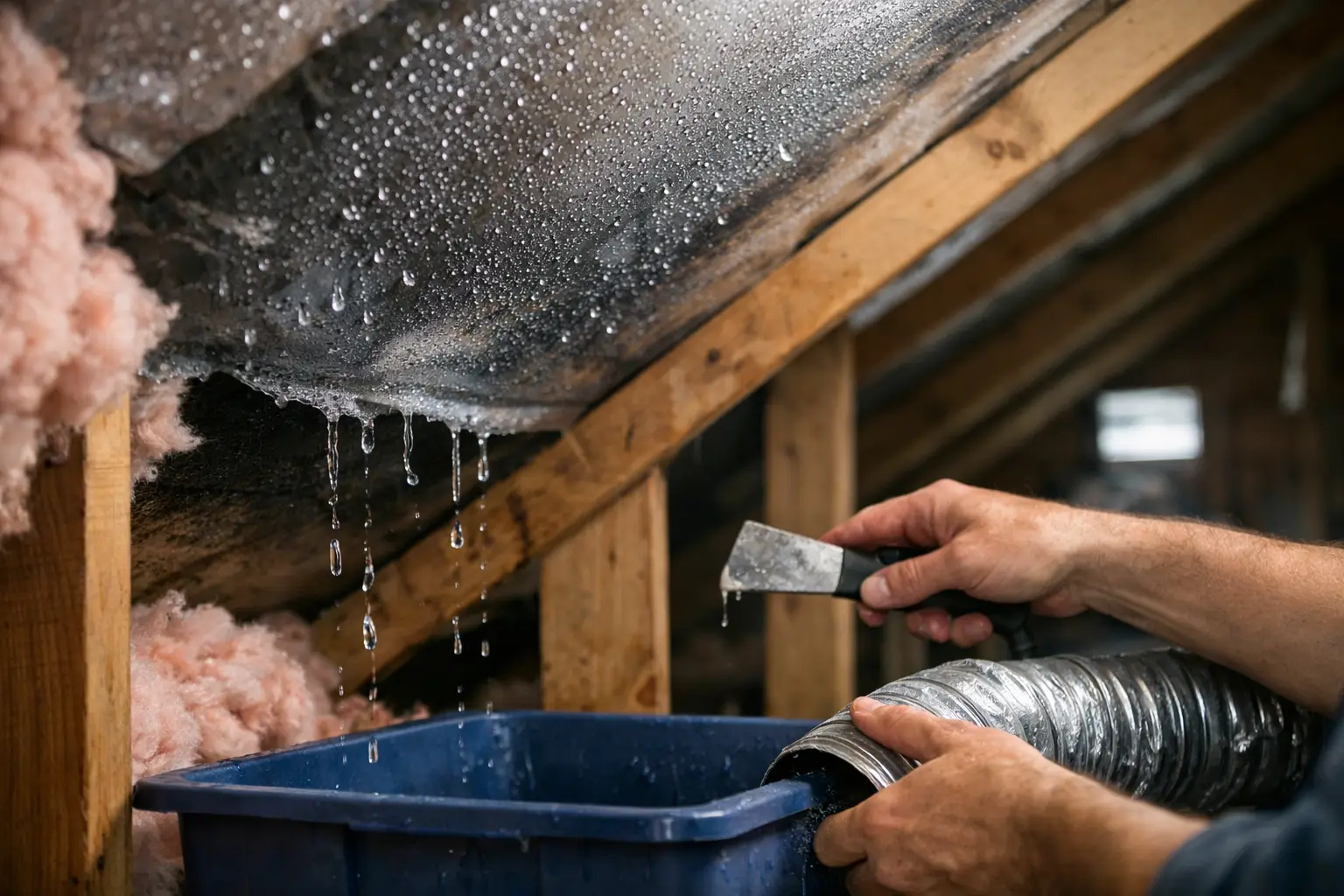
Condensation forms when warm air carrying water vapour meets a cold surface. In a loft, that cold surface may be the underside of roof tiles, roofing felt, timber rafters or metal fixings. As the air cools, it can no longer hold the same amount of moisture, so water forms as droplets.
The moisture usually begins inside the house. Everyday living creates a surprising amount of water vapour through cooking, showers, baths, drying clothes indoors and even breathing. Normally, extractor fans and background ventilation remove much of it. If moist air escapes through gaps around loft hatches, pipework, recessed light fittings or poorly sealed ceilings, it rises straight into the cold loft.
At the same time, the loft needs ventilation from outside. Air should be able to enter and leave through suitable eaves, soffit, ridge or tile vents, depending on the roof design. If these routes are blocked by insulation, debris, stored items or unsuitable previous work, damp air stays trapped under the roof covering.
Newer windows and doors can also alter the balance. They improve draughtproofing in the main house, which is usually positive, but they may reduce incidental airflow in a property that has not had its extractor fans or loft ventilation upgraded to suit. This is why condensation sometimes appears after home improvements even when the roof itself is sound.
Condensation or a roof leak?
Both problems can leave damp patches, but their patterns are different. Condensation tends to be widespread. You may see droplets or a light film across large areas of felt, nails, rafters or the underside of tiles, particularly early in the morning or after a cold night. Rusted nail heads and white staining can be early signs.
A leak is more likely to be localised. It may appear below a slipped tile, cracked flashing, damaged valley, chimney junction or rooflight. The dampness often gets worse after wind-driven rain and follows a more defined path through the roof structure.
There can be overlap. Condensation can make an existing defect harder to identify, while a small roof leak can create a damp environment that looks like condensation. A site inspection is the sensible starting point, especially if there are water marks on ceilings, sagging plasterboard, wet insulation or visible decay in roof timbers.
The checks that make a lasting difference
Before work is specified, the loft should be inspected as a whole system rather than as an isolated roof problem. That means looking at the roof covering, ventilation routes, insulation level and the ceiling below.
A contractor will usually check whether eaves ventilation is open and continuous, whether insulation has been pushed too tightly into the eaves, and whether existing vents are adequate for the roof type. They should also look for signs of blocked soffits, damaged felt, missing tiles and failed leadwork that could be admitting water.
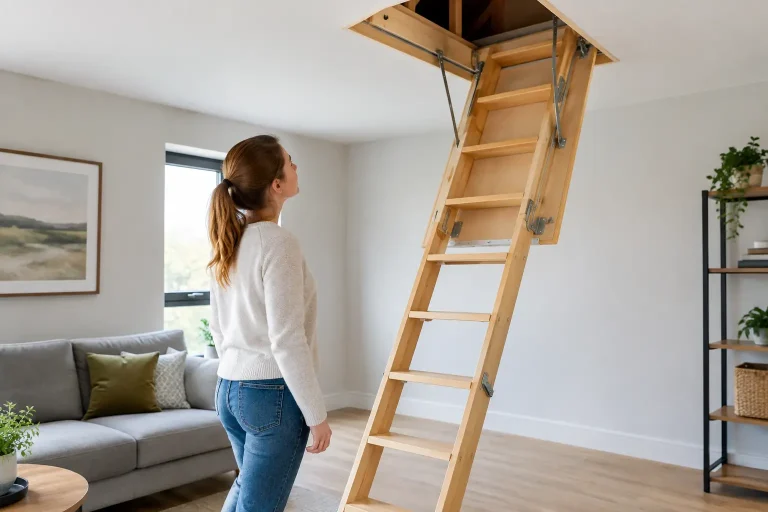
The loft hatch deserves attention too. An uninsulated or poorly fitting hatch can allow a steady flow of warm air into the loft. Sealing gaps around pipes, cables and ceiling penetrations can have the same value. These are often small works, but they directly reduce the amount of moisture reaching cold roof surfaces.
Inside the house, check that bathroom and kitchen extractor fans discharge outside rather than into the loft. This is a serious but avoidable cause of excessive moisture. Flexible ducting should be correctly routed, insulated where needed and terminated externally. A fan that only recirculates air, is weak, or is rarely used may not control humidity sufficiently.
Why adding insulation can sometimes make it worse
Insulation is essential for keeping heat in the home, but it must be installed with the roof ventilation strategy in mind. Mineral wool laid across the loft floor should not block the airflow at the eaves. Ventilation trays or baffles may be needed to keep a clear channel between the insulation and roof covering.
Problems also arise when insulation is piled high around the edges without checking the soffit vents, or when a loft is used heavily for storage and boards compress the insulation. Compressed insulation performs less effectively, while overcrowding can restrict air movement and make future inspections difficult.
The right approach depends on whether the loft is a cold roof space, where insulation sits at ceiling level, or part of a loft conversion, where insulation is fitted along the roof slopes. A converted loft needs a carefully designed build-up that manages ventilation, insulation, vapour control and internal finishes together. Simply copying a detail from an unconverted loft can create moisture problems behind plasterboard.
Practical steps homeowners can take now
Start by reducing moisture at source. Use extractor fans during showers and cooking, and leave them running for an appropriate period afterwards. Keep internal doors closed while bathrooms are in use where possible, and avoid routinely drying washing indoors without adequate ventilation.
Then inspect the loft on a dry, cold morning with a torch. Look for droplets, darkened timber, damp insulation, mould and staining around roof penetrations. Do not walk on ceiling plasterboard between joists, and do not disturb electrical wiring or insulation if you are unsure what is beneath it.
If the loft hatch is visibly draughty, improving its insulation and seal can be worthwhile. However, avoid blocking vents in an attempt to stop cold air entering the loft. A cold loft is normal. The goal is to prevent warm, humid household air reaching it, while allowing the loft to ventilate safely to the outside.
When professional repair is the sensible option
Arrange an assessment if the issue is persistent, if timbers feel soft or show fungal growth, or if you cannot tell whether water is coming from condensation or rain penetration. Early action is generally more straightforward than replacing decayed timbers, damaged ceilings or saturated insulation later.
A well-planned repair may involve clearing or adding ventilation, correcting insulation at the eaves, improving the loft hatch seal, repairing faults in the roof covering, or addressing extractor ducting. The scope should be based on what is found, not on a one-size-fits-all fix. On older properties especially, the roof construction, previous alterations and condition of the felt can all affect the right solution.
For a loft conversion or major roof refurbishment, condensation control should be considered at the planning stage. Coordinating the roofing, insulation, ventilation and internal trades avoids gaps in responsibility and helps protect the finished space for the long term. IR Building & Construction can assess the existing roof and loft arrangement, explain the practical options and provide a clear scope for the required work.
A dry loft is not about making the roof space warmer. It is about keeping household moisture where it can be extracted, maintaining airflow where the roof needs it and dealing promptly with any defect that allows water in.